.png)
Geely EX5 Five-Star ANCAP Safety Rating: What Brisbane EV Buyers Need to Know
Vehicle Safety & Technology | Barton's Geely Capalaba
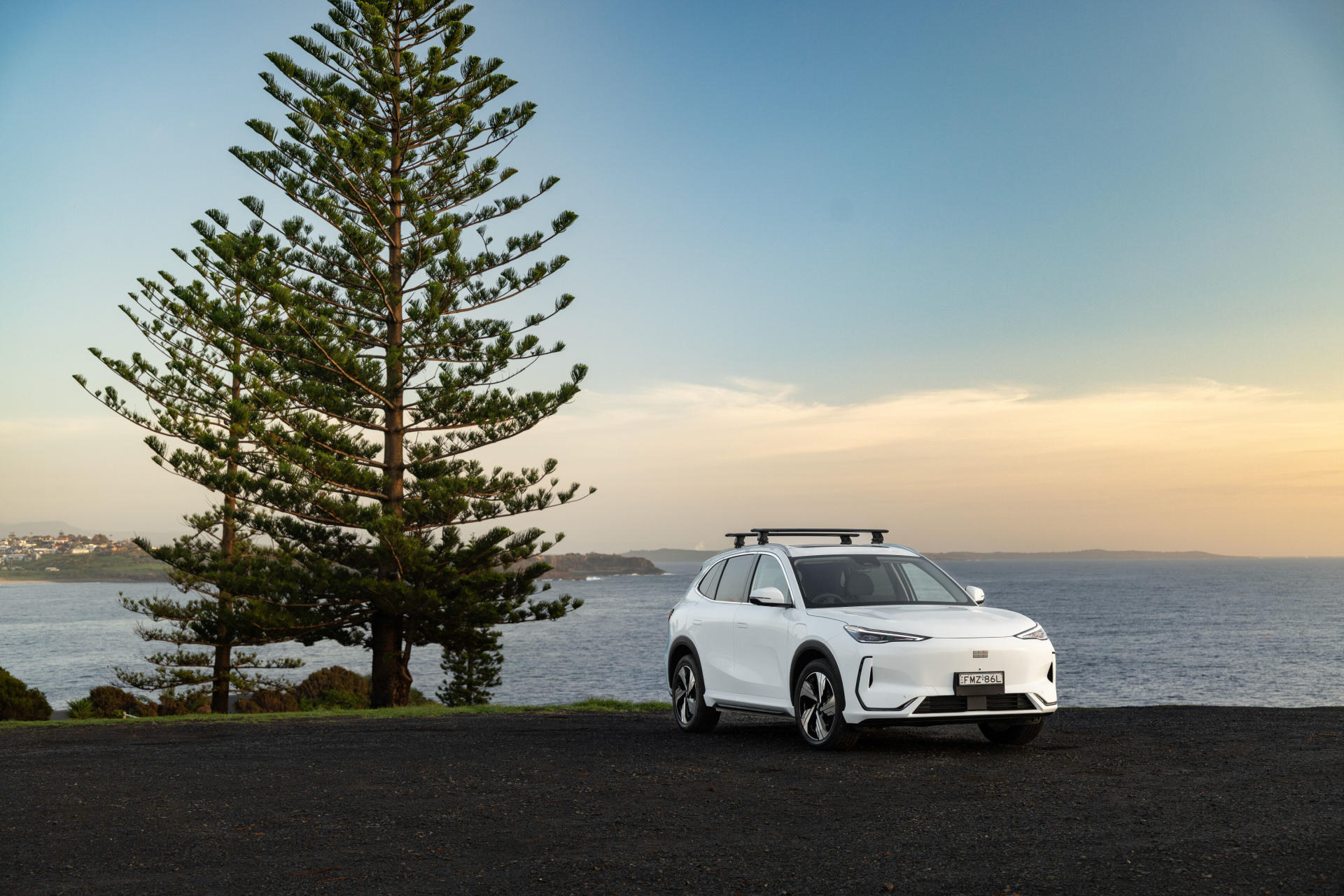
The Geely EX5 has earned a five-star ANCAP safety rating (the highest possible result) under the demanding 2023-2025 assessment criteria. Introduced to Australia in March 2025, the EX5 is a battery-electric medium SUV available in two variants, both achieving strong results across all four ANCAP assessment categories. The rating was published in April 2025 and applies to all variants built from January 2025 onwards.
For buyers evaluating an electric SUV, one of the most useful things an ANCAP rating can tell you is that the battery-electric architecture has not compromised the vehicle's structural integrity or active safety capability. The EX5's five-star result goes a long way towards answering that question, with some specific findings that EV buyers deserve to understand in full.
The full Geely EX5 range is available at Barton's New Energy Vehicles in Wynnum.
What is an ANCAP Safety Rating?
ANCAP independently crash-tests and rates new vehicles sold in Australia and New Zealand at accredited facilities, completely separate from manufacturer safety claims. Battery-electric vehicles are assessed under the same 2023-2025 criteria as all passenger vehicles, with no concessions made for the powertrain. A five-star rating is the highest result achievable.
ANCAP assesses four key categories: Adult Occupant Protection, Child Occupant Protection, Vulnerable Road User Protection, and Safety Assist.
Geely EX5 ANCAP Safety Rating: The Full Scorecard
The Geely EX5 (built from January 2025 in Australia) achieved the following results:
| Category | Score | Rating |
|---|---|---|
| Adult Occupant Protection | 34.53 / 40 | 86% |
| Child Occupant Protection | 42.79 / 49 | 87% |
| Vulnerable Road User Protection | 52.77 / 63 | 83% |
| Safety Assist | 15.43 / 18 | 85% |
Both variants sold in Australia and New Zealand are covered. The rating expires December 2031.
| Variant | Powertrain | Drivetrain |
|---|---|---|
| Geely EX5 Complete | BEV | 2WD |
| Geely EX5 Inspire | BEV | 2WD |
Adult Occupant Protection: 86%
What the Results Show
Adult occupant protection requires honest explanation in two specific areas for EV buyers.
In the frontal offset test, welds around the base of the A-pillar became detached and there was some tearing of the metal. Geely demonstrated the structure did not incur significantly greater damage in a more severe test, and ANCAP accepted this evidence, but penalties were still applied. The driver's chest score was penalised, and because the structural event prevented full assessment of the knees and femurs, upper leg protection for both the driver and front passenger was assessed as marginal. Three deductions were applied to the driver and two to the front passenger. Head, neck, and lower leg protection remained good for both occupants. The compatibility penalty was 2.67 points.
The five-star rating holds. For EV buyers, the key structural finding is that Geely's battery-electric architecture itself was not the issue. The findings related to the A-pillar welds, not the battery pack or EV-specific components.
In the full-width frontal test, driver protection was good across all body areas. Rear passenger chest protection was rated weak (0.50 out of 4 points). This is worth noting for passengers in the rear seat.
The side impact scored the maximum 6.00 out of 6 points, the oblique pole returned 5.57 out of 6, whiplash protection scored the full 4.00 out of 4.00, and the far-side impact scored the full 4.00 out of 4.00. Both doors and windows passed submergence testing, a complete result that is specifically relevant to battery-electric vehicles where water ingress and high-voltage systems present additional considerations.
Child Occupant Protection: 87%
Child occupant protection was the Geely EX5's highest-scoring category. The frontal offset test scored 15.98 out of 16, with good protection across all critical body regions of both child dummies apart from the ten-year-old's neck (adequate). The side impact scored the maximum 8.00 out of 8 points with good protection across all body regions for both dummies.
ISOFix lower anchorages are fitted to both rear outboard seats, with top tether anchorages across all rear positions. Most child restraint types can be installed in most rear positions. One booster seat could not be correctly installed in the centre rear position.
A direct child presence detection (CPD) system is fitted as standard across all rear seats. However, the system did not meet ANCAP's requirements in testing and was not awarded points. The system is present on the vehicle; buyers should note this testing outcome.
Vulnerable Road User Protection: 83%
Physical Impact
The bonnet and windscreen provided good or adequate head protection to pedestrians over most of the surface, with poor results at the stiff windscreen pillars. Pelvis protection ranged from good to weak. Femur protection was mostly good. Lower leg protection was mostly good with maximum knee and tibia points.
AEB: Pedestrians, Cyclists, and Motorcyclists
The VRU AEB system operates from 4 km/h to 90 km/h in forward scenarios.
Forward pedestrian AEB was rated good, with collisions avoided or mitigated in most tests including turning scenarios, day and night. For electric vehicles that operate more quietly at low speeds, this level of forward pedestrian detection is particularly relevant to the urban environments where EVs are most commonly used.
Two systems require specific disclosure for EV buyers. The Geely EX5 has both an AEB Backover system and a cyclist dooring detection system fitted, but neither is on by default. ANCAP only assesses and awards points for systems that are active by default, so neither received points. When the AEB Backover system was additionally tested, it returned poor performance, failing to prevent collisions in the reverse scenarios. Buyers who consider backover AEB a priority should factor this in.
Cyclist AEB in forward scenarios was rated good at all test speeds including turning. Motorcyclist AEB and lane support were both exceptional, earning the full 6.00 out of 6 and the full 3.00 out of 3 respectively.
Safety Assist: 85%
Car-to-car AEB operates from 4 km/h to 150 km/h. Performance against a stationary vehicle was adequate, with limited effectiveness in higher-speed forward collision warning scenarios. Against slower-moving, lightly braking, and heavily braking vehicles, performance was good. AEB Junction and Crossing both returned good results. AEB Head-On performance was adequate (0.50 out of 1).
The lane support system operates from 65 to 180 km/h and earned the full 3.00 out of 3 points, a perfect result. iACC is fitted as standard, alongside camera and map-based speed sign recognition and an intelligent speed limiter. For EV buyers, iACC is a meaningful running cost and efficiency feature as well as a safety one.
A direct driver monitoring system detecting distraction and fatigue scored 1.50 out of 2. Seat belt reminders with occupancy detection for all positions scored the full 1.00 out of 1. No eCall is fitted (0.67 default only).
Safety Features: What Comes Standard
- Dual frontal, side chest, side head curtain, and centre airbags
- AEB: car-to-car (4-150 km/h), pedestrian forward, AEB Backover (fitted; not default ON; poor test performance), cyclist, motorcyclist
- AEB Junction, Crossing, and Head-On
- Lane keep assist and emergency lane keeping (65-180 km/h)
- Lane departure warning, forward collision warning, blind spot monitoring
- iACC, speed sign recognition (camera and map), intelligent speed limiter, manual speed limiter
- Direct driver monitoring system (distraction and fatigue)
- Child presence detection (fitted; did not meet ANCAP requirements)
- Cyclist dooring detection (fitted; not default ON; zero points awarded)
- Seat belt reminders with occupancy detection (all positions)
- Multi-collision braking
- ISOFix and top tether anchorages
Not available: eCall, knee airbags.
The EV Safety Picture: What the Result Tells You
For buyers making the switch to electric, the Geely EX5's five-star ANCAP result provides a meaningful independent benchmark. The EV-specific considerations in this result are reassuring: the battery-electric architecture was not a factor in the test findings, both doors and windows passed submergence testing, and the forward AEB and lane support systems perform well.
The findings that require attention, namely the A-pillar weld penalties, the default-off backover and dooring systems, and the rear passenger chest result, are vehicle-specific rather than EV-specific, and they are disclosed fully in the ANCAP report and in this article.
Speak to Barton's New Energy Vehicles
Our team at Barton's New Energy Vehicles in Brisbane can walk you through the full EX5 specification, compare the Complete and Inspire variants, and help you understand the charging and running cost picture. Visit BartonsNewEnergyVehicles.com.au to browse current stock or make an enquiry online.
Geely EX5 For Sale in Brisbane
All safety scores, test results, and feature listings are drawn directly from the official ANCAP assessment report for the Geely EX5 (March 2025 onwards), published April 2025. Rating applies to all Australian and New Zealand market variants built from January 2025 (AU) and February 2025 (NZ) onwards. Source: ancap.com.au.