.png)
Farizon SV: Five-Star Euro NCAP and ANCAP Platinum Safety Credentials Explained for EV Fleet Buyers
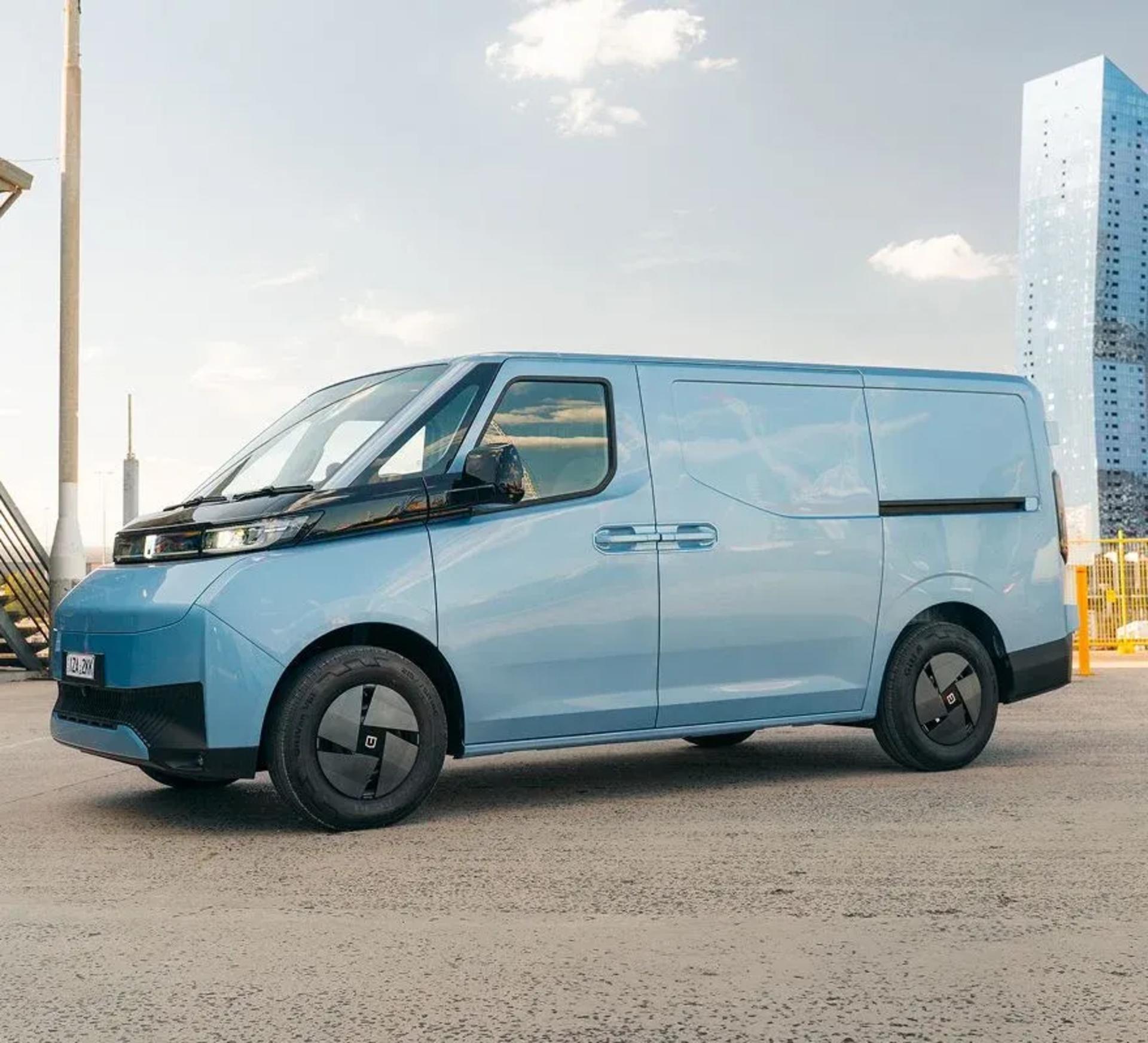
Vehicle Safety & Technology | Farizon | Barton's Wynnum Farizon
One of the most common questions about electric commercial vehicles is whether the safety credentials match those of established diesel alternatives. For the Farizon SV, the answer is now independently verified across two separate programmes: a five-star Euro NCAP commercial van safety rating and an ANCAP Platinum safety grading at 84 per cent.
These results were produced by two of the world's most credible independent vehicle safety authorities, assessed separately and arriving at consistent conclusions. Together they give businesses, fleet managers, and EV adopters the most complete active safety picture available for any electric van currently on sale in Australia.
Two Programmes, One Story
Euro NCAP's Safer Trucks and Vans programme (five stars, published May 2025) is the most rigorous commercial van safety assessment available globally. It tests Safe Driving systems, Crash Avoidance technology, and Post Crash Safety, awarding one to five stars. The Farizon SV earned five stars in the 2025 round.
ANCAP's Commercial Van Safety Comparison (Platinum grading, 84%, published December 2025) is Australia and New Zealand's own independent programme, evaluating the active collision avoidance technology fitted to commercial vans and awarding gradings from Bronze to Platinum.
Neither programme assesses physical crash protection through occupant impact tests, so these results cannot be directly compared to a passenger car star rating. What they assess is the active safety technology: the systems that help drivers avoid a crash in the first place. And across both programmes, the Farizon SV's active safety systems perform well.
The Scores at a Glance
Euro NCAP (five stars, 2025):
| Area | Score | Percentage |
|---|---|---|
| Safe Driving | 60 / 100 pts | 60% |
| Crash Avoidance | 85.40 / 100 pts | 85% |
| Post Crash Safety | 80 / 100 pts | 80% |
ANCAP (Platinum, 84%, 2024 assessed):
| Assessment Area | Result |
|---|---|
| AEB Car-to-Car | Good |
| AEB Pedestrian | Good |
| AEB Cyclist | Good |
| Lane Support | Good |
| Occupant Safe Move (OSM) | Good |
| Speed Assistance System (SAS) | Marginal |
| Overall Score | 84% |
Safe Driving: 60% and What it Means
The 60 per cent Safe Driving result from Euro NCAP reflects a mix of strong performance and specific gaps that are worth understanding clearly.
Where the Farizon SV scores full marks:
Seat belt reminders for the driver and front passenger are standard and scored the full 25 out of 25 points for occupant monitoring. The driver monitoring system, which detects fatigue-related driving behaviour and alerts the driver, also scored the full 25 out of 25 points for driver engagement. Both are fitted as standard across all variants in Australia and New Zealand.
For EV fleet buyers with duty-of-care obligations around driver behaviour, the fact that fatigue monitoring and seat belt reminders both achieve maximum Euro NCAP points is a relevant baseline.
Where the score is limited:
Speed assistance scored only 10 out of 30 points. The Farizon SV reads speed limit signs via a camera and displays the current limit to the driver, which is what earns those 10 points. However, it does not have an active speed control function that can limit the vehicle to the posted speed. This is the single feature that most significantly affects the Safe Driving score, and it is consistent with what ANCAP's assessment found (marginal speed assistance result). Adaptive Cruise Control was not assessed as part of the Euro NCAP rating (0 out of 15), and steering assistance is not available (0 out of 5).
For EV fleet operators with telematics-based speed management already deployed, the absence of a factory speed limiter may be less significant in practice. For those building a safety case from scratch and wanting factory-integrated speed control, this is a genuine limitation.
Crash Avoidance: 85% and Good Across All Forward Categories
This is the Farizon SV's strongest area and the most relevant for day-to-day operational risk management.
Car-to-car AEB: Scored 38.20 out of 40 in Euro NCAP testing. Performance was good across all offsets and at most test speeds, with full points against slower-moving and braking vehicles. ANCAP also rated this as good. The system is standard on all variants and operates across the full range of highway and urban speeds.
Pedestrian and cyclist AEB: Scored 22.20 out of 25. Collisions were avoided in most forward scenarios. Both programmes rated this as good. For electric van operators covering urban delivery routes where pedestrians and cyclists are a daily reality, this is the most operationally relevant AEB result.
Lane support: Scored the full 25 out of 25 points in Euro NCAP's lane departure collision testing, a perfect result. The lane support system steers the vehicle back into lane when it drifts and intervenes more firmly in emergency situations to prevent the van leaving the road entirely. ANCAP also rated lane support as good. Lane departure warning and blind spot monitoring are both standard.
Backover AEB: Scored 0 out of 10. The Farizon SV does not have AEB Backover capability. ANCAP similarly noted this as not available. For operations involving significant reversing in pedestrian areas or loading bays, this is a gap to manage operationally.
Post Crash Safety: 80%
Rescue information: Scored 80 out of 90. The rescue sheet and guide for first responders are available, which is particularly relevant for an electric van given the high-voltage systems involved. Strong result in this sub-category.
Advanced eCall: Not available (0 out of 5). The Farizon SV does not automatically contact emergency services following a crash. For fleets that value connected emergency response, this is worth noting.
Occupant extrication: Not available (0 out of 5).
What This Means for Businesses Transitioning to Electric
The two assessments, taken together, provide a consistent and honest picture of the Farizon SV's safety technology. The forward AEB systems are effective, the lane support system is best-in-class within this assessment, and the driver monitoring and seat belt reminders meet the highest available standards in Euro NCAP testing. The gaps are clearly defined: no backover AEB, no active speed limiting, no eCall.
For fleet managers, sustainability officers, and business owners evaluating whether an electric van can meet the safety standards required by their organisation, the Farizon SV's combined Euro NCAP and ANCAP result provides a robust answer. The active safety technology performs at a high level across two independent assessments. The limitations are real but disclosed, and manageable within a broader fleet safety framework.
What Comes Standard on the Farizon SV
- Autonomous emergency braking: car-to-car, pedestrian, and cyclist (forward)
- Lane departure warning (LDW), lane keep assist (LKA), and emergency lane keeping (ELK)
- Blind spot monitoring (BSM)
- Driver monitoring system (DMS): fatigue detection and alert
- Seat belt reminders (driver and front passenger)
- Speed limit information function (SLIF): camera-based display only
Not available: AEB Backover, active speed control function, steering assistance, advanced eCall.
Speak to Barton's New Energy Vehicles
At Barton's New Energy Vehicles, we specialise in helping businesses make informed decisions about electric commercial vehicles.
The Farizon SV's five-star Euro NCAP rating and ANCAP Platinum grading are the most complete safety credentials available for an electric van in this segment in Australia, and our team can walk you through the full picture alongside charging infrastructure, total cost of ownership, and fleet pricing.
Visit Bartons New Energy Vehicles in Wynnum or make an enquiry at BartonsNewEnergyVehicles.com.au.
Farizon Electric Vans For Sale in Brisbane
Safety performance data drawn from the Euro NCAP 2025 Safer Trucks and Vans assessment (tested model: 200 kW, 66 kWh, H3L2; applies to model year 2024 onwards; published May 2025) and the ANCAP Commercial Van Safety Comparison (all Australian variants built from January 2025; assessed 2024; published December 2025). Neither assessment is a traditional passenger car star rating. Sources: euroncap.com and ancap.com.au.